I
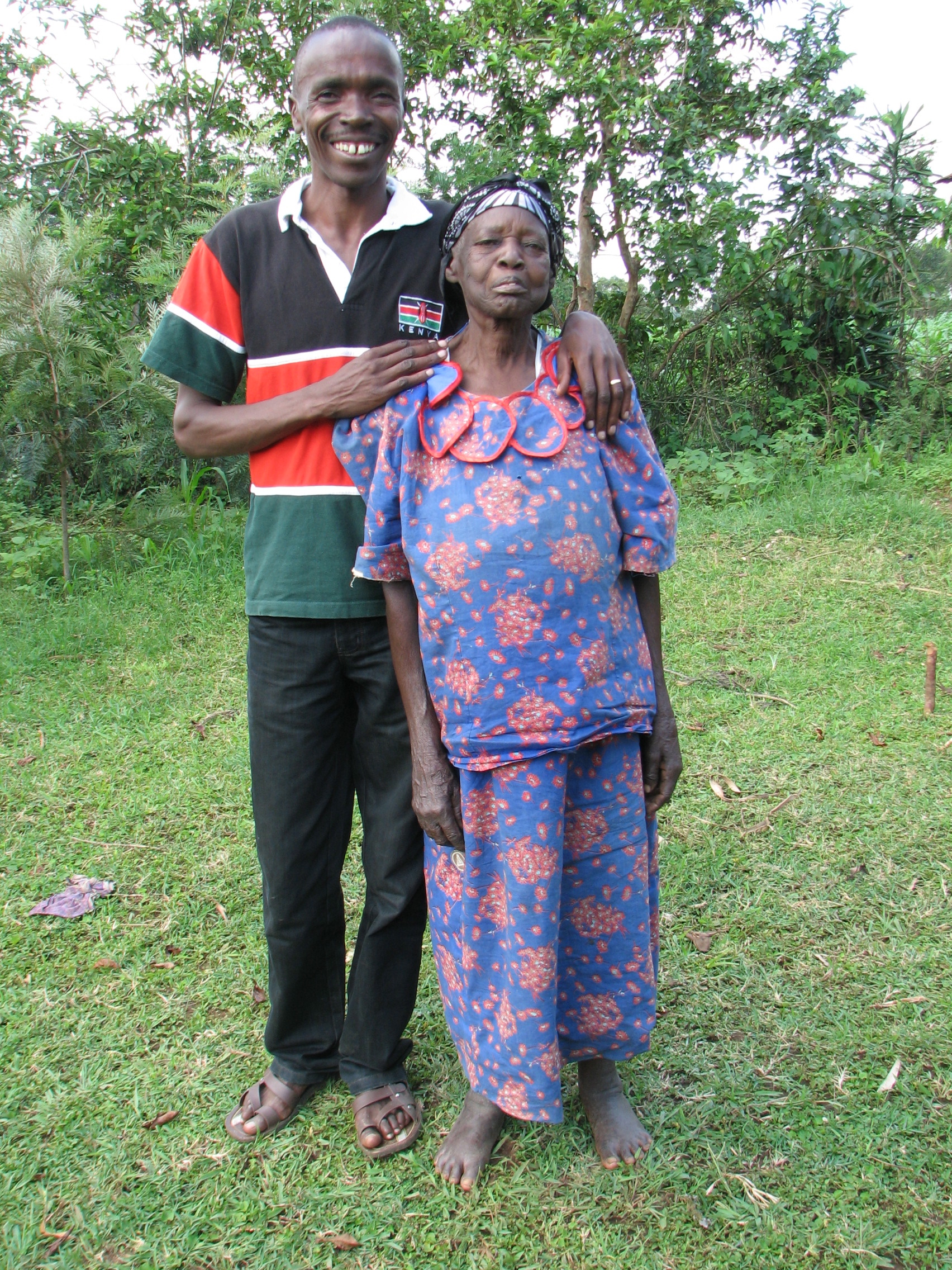
Sunday morning, so the traffic is light, by Nairobi standards. Which is to say that it might only take 45 minutes to drive from Ronald’s apartment, on the airport side of town, to visit Wilberforce’s family, on the other side. Kenya is a country full of archaic English names. Wilberforce, for example. Humphrey, Ignatius, Wycliff, Heathcoate – and it is jarring to meet a man on a dirt village track with a name out of Downton Abbey.
This day, our last in a stint almost six weeks long, has been dedicated to visiting and saying goodbye to the people who have embraced us and enabled our plans in east Africa. People like Wilberforce, who has driven us across the country on potholed roads worthy of war zones, who has left us his car and endured overnight bus rides from western Kenya so we could have easy transport, who has sat patiently with us through three-hour traffic jams that are a matter of course for Nairobi drivers, but which, by any other standard, are appalling. Completely unacceptable. “People sometimes have to sleep in their cars,” Wilberforce told us, in one of the early jams we survived together. “Or they stay at their office all night. At least this one is moving.” Every time traffics slows, vendors appear. People hawking roasted peanuts wrapped in cones of recycled office paper, or bananas, or out of date magazines, or a plant root known for its restorative qualities (also a reputed aphrodisiac), or hedge clippers. Where do they get this stuff? We are counseled to roll up our windows whenever we slow. People tell of having their cell phones or purses grabbed from their hands through the window.
What was appalling our first few days in Nairobi has become mundane. Not comfortable, not easy, but what passes for normal. Men squatting around a fire of scrap lumber and trash in the median strip, boiling up tea, with two lanes of blaring, exhaust belching, vigilante traffic on either side. Youth pulling the two-wheeled flatbed carts that are the urban delivery trucks, piled high with sacks of charcoal, rebar, mounds of bananas, five-gallon water jugs, and navigating roundabouts crammed with jostling buses. Streams of humanity moving – on foot, on one-speed bicycles, on motor scooters, hanging off of buses – and all of them dressed to the hilt. Women with exquisitely braided hairdos, high heels, full length dresses. Men in suits and ties. All of this presentability achieved without hot running water, without washers and dryers, often without electricity. Herculean daily effort just to look good.
Garbage is everywhere, ground into the dirt underfoot, piled against stone walls, swept to the side of the street, reeking, fly covered waste. There are goats grazing through the refuse, roosters pecking at food scraps. No sidewalks, no shoulders on roadways, just beaten, uneven dirt and rocks and mud. Rows of ramshackle stalls line the roads, selling the complete spectrum of goods – blue school trunks, bed frames, pots and pans, produce, shoes, haircuts, internet access, photo copies, dress slacks, fruit, roasted peanuts, highway hazard markers, jumper cables, magazines, phone cards. Miles of it, things for sale, anything you can imagine, and someone sitting in the shadows waiting to make the dollar that will sustain them another day. Behind the stalls, squalid rows of slum dwellings, tin roofs, dirt walls, no services. As we approach Wilberforce’s neighborhood, I notice a disheveled figure lying on the side of the road, motionless. Sleeping, sick, hungover, dead? Impossible to tell.
Wilberforce’s apartment block is gated. “My car would be vandalized if I left it out.” Across the street, garbage piles, a tethered goat, shanties, kids kicking a soccer ball made of wadded up plastic bags. Through the gate, parking gridlock. Cars stacked in like one of those brain-teaser puzzles, “Unsnarl the Jam”. “People have to park very strategically,” W explains. “Sometimes you have to bang on the neighbor’s door at 6 in the morning to get them to move. You remember if they ignore you. Next time, when they need you to move, you don’t answer the door.” It may be a gated compound, but it is anything but fancy. The apartments are concrete block, barred windows, tiny rooms with sporadic running water and electricity that goes off almost daily. The sitting room is crammed with bulky furniture, a television, lacy doilies, photos of the kids. His children come in, beautiful kids, dressed for church. They shake our white hands. They are shy and curious. We have brought school supplies, some earrings. They divvy things up, hold tight to the box of new pencils, sit with their heads bent, listening intently. W works as an insurance salesman. He went to the best high school in Kenya, is among the elite in terms of employability. He speaks rapidly, with confidence and intelligence. One of his mottoes is to “move with absolute confidence”. It applies to border crossings, Nairobi roundabouts, security checkpoints. We look through a tattered photo album – wedding pictures, baby photos. The “house girl” goes out and returns with packaged instant coffee, premixed with creamer and sugar, which we sip. Labor is cheap. Even families of modest means can afford a housekeeper. W’s wife comes and goes. The kids disappear, getting ready for church. It feels awkward. We’ve made liberal use of W’s time and resources, and when he backs us carefully out of the jammed parking lot at the end of our visit, it doesn’t feel like we’ve been able to adequately express our gratitude.
II

Mt. Kilimanjaro at sunrise, seen from the top of Mt. Meru (Socialist Peak)
W drops us back at Ronald and Sheila’s apartment. R and S have been our hosts during our time in Kenya. They were married a month before we arrived. Ronald is the social entrepreneur I am working on a book with, and the motivation for this Kenyan immersion. They have generously shared their small apartment with us, three floors up a somewhat decrepit apartment block, located on a rough dirt side street crammed with little shops, street vendors, bars. We sleep under a mosquito net by a window overlooking the street scene, where bar noise keeps us up late. Over the month we became part of the neighborhood, shopping at the local grocer, using the ATM machine, hiring taxis, buying tomatoes and fruit from street stalls. I shake hands a lot. By staying here, we gain an ’embedded’ status; this is not the tourist beat. The apartment is typical – a livingroom, a tiny kitchen, a bathroom, two small bedrooms. No closets, no shower, no running hot water, certainly no dishwasher, clothes washer, ironing board. R’s internet is accessed through a flash drive, but is on the slow side, and works best if you take it to the bedroom. For about half of our visit, no running water. They had 5-gallon jugs delivered up three flights of stairs. The electricity went out almost daily, commonly enough that people barely paused in the conversation. Cell phones are the critical technology. “Kenya runs on cell phones,” R said. “I don’t know how anything got done before cell phones.” Everyone has one. Coverage is close to universal. We had cell coverage in the mud/dung hut in R’s mother’s compound in a remote village in western Kenya. She cooks on three rocks over an open fire. She lights a paraffin lamp at night. For several months every year, between corn crops, she lives on one meal a day. But she can call anywhere in the world for a few Kenyan shillings a minute.
Sheila has insisted that we meet her mother. A mid-afternoon meal has been planned. Sheila is in her late twenties. She is a stunning woman with a dazzling smile, intricately braided hair, always dressed to the nines. She, too, grew up in village Kenya. Her rural life was devoted to hauling water, washing laundry by hand, cooking, cleaning the compound, cutting grass to feed the cows, and oh yes, to school work. She has ambitions. She would like to write screen plays. She has thought about interior design. For now she is stuck working for a shipping company. She gets up before six, makes breakfast, takes a ‘shower’, irons her clothes on the couch, takes a crowded ‘metatu’ bus to work in a cubicle all day. She often gets home after seven, and then pitches in to make dinner, which, routinely, is served up around 10 pm.
We leave at 2 o’clock to make it by 3. It isn’t far, but R and S do not own a car. Only about 10% of Kenyans own a vehicle. Hard to imagine the gridlock that would result from a bump in the percentage of car ownership, but the upshot is that people get around by other means. While the country may operate by cell phone, it travels by metatu. These buses are the Toyota equivalent of a Ford Econoline van – 14 passengers, a sliding door, people stuffed into travel worn seats, paying .25 or .50 to bump through dense traffic to their destination. Metatu vans are beat up, dented, broken down vehicles that nevertheless service the travelers throughout Kenya. Fleets of them compete fiercely for passengers. Each has a hawker who cajoles people aboard, hangs precariously from the doorway, and collects fares. Drivers are ruthlessly competitive, passing three abreast, pulling around each other in heavy traffic, cutting vehicles off, jouncing down shortcuts. Metatu territories are managed by a Mafia-like underworld of extortionists who extract protection payments from drivers and assign routes, and who beat or kill the uncooperative.
Sheila studies several possible metatu options at the nearby bus stop, ignoring the pleadings of hawkers, assessing them for comfort and safety, rejecting two or three, before nodding towards a white Toyota with available seats. I end up crammed in the back corner, my neck crimped at 45 degrees, thigh to thigh with other passengers, hoping I escape permanent spinal injury. Rock music throbs through the vehicle. We make frequent stops, offloading, picking up, making deals, then rocketing off again. Finally Sheila nods for us to get out and I squirm my way towards the door. It is liberation to stand straight, to escape.
From the stop, it’s still a pretty good hike to Sheila’s mother’s place. Winding alleys through tin-roofed hovels. Kids playing in the dirt. People selling, constantly selling. It doesn’t matter the day of the week, the time of day, the weather. Everyone out to make a buck. Garbage wafts in the breeze. Vehicles zoom past, bicycles, men pulling carts. Doorways open on shadowed lives, stories, ambitions, loves, feuds. We are curiosities, white faces in a sea of black. Everyone turns to look. Kids jog alongside, looking up at our alien complexions, smiling.
These neighborhoods, part of an urban sprawl housing more than five million people, are absolute warrens. I pride myself on my navigational ability, but I would be utterly incapable of finding my way out. Turn after turn, rows of shanties, alleyways, no street signs or landmarks. How would a kid find the way home, I wonder. How would a newcomer to Nairobi, arrived from the villages, seeking some kind of work, shelterless, poor, starving, barefoot, find the resources to make their way?
Finally, we turn into a doorway that looks like all the rest, down a narrow aisle through apartments. We push through a curtain into a front room filled with a low table and comfortable chairs. “Sit,” we are told. A television drones. In a back room a radio plays. Kenyans crave background noise. One night in the villages we were invited to a goat roast at one of Ronald’s relatives. We sat outside by a fire while a haunch of goat roasted in the coals. It was a lovely, dark night full of stars and evening birds and our conversation, until another guest did everyone the favor of finding a radio station he could pick up on his cell phone and blaring the static-filled music, rendering conversation impossible. Sheila goes back to help in the kitchen. We are left on the couch, idly watching a bad Nigerian soap opera in Swahili. People come and go, popping in through the curtain, sitting for a time, making self-conscious introductions, then leaving. Sisters, friends, brothers, neighbors. We wash our hands in a bowl of warm water. A dinner of rice and chicken and steamed kale is served. We are brought forks, although most Kenyans eat with their hands.
“We moved here after the political violence in 2007,” Sheila’s mother tells us. “Neighbors were killed, houses burned down. It wasn’t safe to stay there.” That political violence shocked Kenyans. It remains a cultural scar, a forbidden blemish on their character, a thing they never dreamed themselves capable of. The upcoming election cycle is a very nervous topic.
Sheila and her mother have an easy comfort together. I think about the world our kids are raised in back home, the certainties they take for granted, and about the fearsome unknowns in a life here. Security may be an illusion, but here, in Africa, that illusion is stark and inescapable. In each world, the goals are the same, the passions, the grief, the ambitions – the context is what is so dramatically different. Dishes of food keep coming from the kitchen. This feast is a major undertaking, a significant expense. Chicken, here, is like a holiday ham or turkey. We wash hands again, talk about our families, our different seasons, our foods. They smile at the idea of snow six months of every year.
When it is time to leave Sheila’s mother sees us off, another Kenyan tradition. In this case, seeing us off entails a stroll of half a mile or more. One of S’s sisters comes along with her active young son, who occupies himself tossing a ‘D’ cell battery down the roadway. The battery splits apart. He keeps picking it up, throwing it ahead. I think about what is inside a battery. And then, I think that the innards of a battery is the least of this young boy’s worries.
At the metatu stop we say goodbye, do the two cheek embrace, give thanks for our meal. S scrutinizes a metatu with a front seat available for me, and nods. I hop in next to the driver and get to observe the operation close up and in relative comfort. The driver is young, lean, quiet. His eyes flick from the road to the rearview mirror, to the side mirror. The hawker pounds on the roof to stop, hops into the roadway to seek riders, hops back on through the maw of the door. The driver is deadpan, flatline, his only expression is leaning on the horn, eyes darting. The gas gauge is on empty. It occurs to me that I haven’t seen a single gas gauge register above a quarter tank in a month. “The roads are relatively quiet around the third week of the month,” W told us once. “Nobody has any money to buy gas then.” Generally, people pull in to a pump, hand over 1,000 shillings (roughly $12), enough to buy a couple of gallons, then off they go, the needle barely rising. In this van the oil light is on, as is the check engine light. Rock and roll blares from the radio. Another passenger, a large woman, squeezes in next to me, and I’m pressed up against the stick shift. On we go.
At one point a young man comes running alongside and shouts something in Swahili to the driver. The driver gives him 1,000 shillings and a cell phone and the man sprints off across the street to a gas station. We crawl along in the traffic. The driver keeps looking back as the van moves past the station and his friend doesn’t reappear. He blares the horn. Traffic picks up. Half a mile later, across a bridge, when I have forgotten about him, the young man reappears at the passenger window, hands in a wad of bills and the cell phone. The driver, expressionless, takes it back. The young man drops away on the roadside.
It is dusk now. Nairobi shimmers in the late light, layered under smog, a cacophony of human dysfunction finishing another day. I now recognize the landmarks – a billboard advertising underarm deodorant that won’t stain clothing, a green pedestrian bridge over four lanes of traffic – enough to know where to extricate myself, dismount, and try not to get killed crossing the road.
III

Elephants in the Masai Mara
Ronald’s place is packed when we return. Wilberforce is there, wearing his Leopards soccer jersey and a jaunty ball cap. Ignatius, another of R’s high school friends, who works at the Nairobi GM plant. Peter, one of R’s technical team on a water kiosk project. I had said something about interviewing Peter before I left, and here he is, final night, ready to talk. Only the television is going, everyone is commenting, and dinner is the burning topic.
Before dinner, Ronald holds forth on one of his theories. He believes that the demographic trend of people leaving the villages and farms for the big city is over. “When you identify a trend,” he says, “it’s already done. Everyone talks about millions of people flooding the cities of the world, and Nairobi is a good example. But I think it’s about to go back the other way. We need to take the city to the village,” he insists. Here’s the thing, he believes. People came to cities because there were no options in the country. There wasn’t enough land, people were starving, and there weren’t other avenues for making a living. So people came to Nairobi and struggled to find a niche, make do, get a job, any job, and put up with the traffic, the pollution, the lack of community, the day-to-day fight to hold on. Everyone agrees that it is insane. No one likes it, but it’s what they have to do. Only now there is enough infrastructure available in the villages to make other options available. “My work,” he says, “depends almost entirely on the computer, on the internet, on the telephone.” All of that, now, is potentially available in the village, where I am much more at home and would much rather live. Besides, he asserts, half of the time the infrastructure I depend on isn’t even available in the city. Here in Nairobi I can’t count on running water, on electricity. The traffic is so bad I can’t get to meetings on time. “The tide of people moving to the city is coming to an end. The new trend will be people moving back to the village, and I want to be one of them.”
The men in the room nod and agree. Sheila is less convinced. Partly, I think, because she is young and the pace and potential of the city is still heady. The possibilities and excitement outweigh the price she pays each day to survive. Also, I can’t help thinking, her memories of village life are not as rosy and bucolic as those of the men. Girls and women in rural Kenya are beasts of burden, literally, and bear the brunt of household labor and child-rearing. Maybe a return to village life isn’t as romantic a notion, given that backdrop.
But it is dinner time. Early in our visit, Ronald helped us make a pizza dinner. Hardly anyone eats cheese in Kenya. Pizza is a known food, but no one cooks it at home, in part because few people have working ovens. Almost all food is steamed, boiled, or fried. Nevertheless, on an evening we sought to save Sheila from cooking another late dinner after her work day, we created what resembled a pizza by making chapati (fry bread) for the crust, finding a bottled tomato sauce that was essentially ketchup with extra corn starch, and cutting up peppers, onion, and breakfast sausage for toppings. For cheese, that time, we finished up a hunk of cheddar we had stowed in our luggage from Amsterdam. It turned out surprisingly well, and ever since, Ronald had been crowing about being a Pizza Maestro. His friends, tonight, clamored to put his claim to the test. Wilberforce especially, who kept pounding the chair armrest and chanting, “We want pizza! We want pizza!”, and insisting that no one help Ronald in the process.
Earlier that day, on the way back from visiting Wilberforce, we stopped at an ex-pat grocery store and picked up mozzerella cheese and another bottle of tomato sauce, in anticipation of a pizza finale. To his credit, R was game, and he blustered his way into the cramped kitchen, hounded by W’s chanting and a general hubbub. “The Maestro needs peace,” he called. “The Maestro needs time.”
“We want pizza! We want pizza!”
Inadequate ingredients was only the start of the challenges facing the Maestro. In truth, the first pizza effort was largely orchestrated by Marypat. R’s main contribution was to mix up a batch of chapati dough for the crust. MP took it from there. Now he was being heckled by the peanut gallery and any attempt at consultation was shouted down. Marypat managed to pass a few hints via sign language and lip reading while R struggled to press out the crust on a pan and cook up the sauce and ingredients. The other problem was that the oven, a wedding gift (before that R had cooked on a two-burner camp stove), was rudimentary. It had a burner light, but no temperature control. The first time, the pizza took quite a long time to brown, but there had been no pressure. This time, the sauce was more soupy than necessary, the crust a bit thick, and the baking took almost two hours. Even then, it wasn’t quite done. R managed the presentation with a flourish. W kept up the ridicule, but managed to choke down several large slices of the doughy, soupy entree. Ignatius left to return his family via late-night metatu (just because you work at GM doesn’t mean you own a car). Peter gulped a slice of pizza and made his excuses. Our interview was a forgotten sideshow.
Wilberforce stayed on. He had agreed to take us to the airport for our middle of the night flight. Marypat stumbled off under the mosquito netting for a couple of hours sleep. I stayed up to watch world cup soccer. Mosquitoes buzzed in the apartment, tormenting me until I put on long pants. Around 1 am, we stood in a circle and Sheila prayed for our safe return with evangelical fervor. We embraced. Then, down the dark stairs, dragging luggage, and out into the deeply dark African night street, accompanied by our new friends, feeling that Montana, and our lives there, were as remote and impossible as Nairobi had been when we had dropped out of the thunderclouds six weeks earlier.