The Inexplicable

I recently read a long interview in The Sun Magazine with an archivist of unexplainable events. Things like alien abductions, premonitions that pan out, UFO sightings, encounters with ghosts, and other accounts that we can’t fathom. Much of that material we choose to discount, and I include myself in that tendency. If we can’t fit it into our template of reality, we ignore it, we question its veracity, we put it into a bin of woo-woo phenomena and move on, comfortable in our realm of knowledge and the pile of stuff we used to look up in encyclopedias and now ask Google to answer for us.

The interview didn’t seek answers, which are, indeed, not available, but it suggested that we should stop ignoring or discounting these accounts. They are experiences and insights and encounters that, while beyond our ken, are also ubiquitous, shared and honestly presented by a great many people. Just because we can’t explain them, or science doesn’t know how to grapple with them, shouldn’t necessarily invalidate them. In fact, it is an act of human arrogance to assume that we can know everything, or that it’s simply a matter of time before we understand it all. You could argue that just the opposite is true – that the more we know, the farther we explore, the more we understand, the more we don’t know and the more complicated and impenetrable reality is. All you have to do is delve into string theory or quantum physics, for example, for things to get really weird and mind-boggling. Suddenly the comfortable realm of building blocks and atomic structure and the nature of time gets pretty psychedelic.

I don’t consider myself a woo-woo person. I don’t put much stock in horoscopes, tarot cards, runes, power vortexes or crystal juju. But I don’t think I’m alone in experiencing things that I can’t explain or understand, and I don’t just mean things that I didn’t take enough science courses in college to wrap my mind around. I’m guessing that if I were more open to these phenomena, I’d probably encounter more of them. That, I think, is one of the underlying points of the magazine interview – not to struggle to explain these things, but simply to have the humility and openness to accept that they exist and have the weight of reality – inexplicable, weird, perhaps uncomfortable or even frightening, but no less real for the fact that we have no idea what to make of them.

As I read the interview, a number of memories came up – times I experienced the inexplicable. For example, I spent a night at a friend’s house in which I’d been told there were ghosts and creepy energy. I didn’t make much of that information, but I ended up having a very fitful night there, full of the presence of ghostly energy and apparitions. When I compared notes with others the next morning, it turned out that I was not alone.

Another time, on the tundra wilds of the Canadian North, on a long canoe expedition with our three young children, we were camped on a sand spit some ten days in. The kids were playing in the shallows, building sand castles on the beach, creating boisterous games and generally being kids. In the midst of their play, I sensed a very powerful response of the landscape to that youthful energy. Energy, I imagined, that had been present on that same landscape when the Inuit lived there, but that had been long absent. It was as if the land was receiving that energy again, welcoming it back. I turned to Marypat and said, “Do you feel that? Like the land is responding to the kids?” “I do,” she said. “Exactly.” I admit, strange, sort of impossible, but there it was and we both felt it profoundly.

Again, many years ago, in the Big Bend region of west Texas, I was camped with three others in the desert backcountry. It was dark as it can only be down there. We were idly scanning the sky, pointing out constellations, getting ready for bed, when we started seeing erratically moving lights, orbs of various color. We looked at these objects with our binoculars. They were shining orbs, pulsing red and green and white. They moved dramatically, falling halfway to the horizon, zooming in closer, receding, rising up. There were several of them. All of us saw them. They stayed in the sky for a long time. We finally got tired and went to bed while they were still active. This was pre-drone times. Could it have been some military exercise, some border technology, something atmospheric? No idea. But undeniably real.

Over the years, I have had a number of interactions with wildlife that defy explanation, and, in general, have a wonderful, mysterious quality about them.

So, okay, an admission that makes my earlier statement about not being woo-woo a little wobbly. I have a totem animal. It’s the chickadee. I know, not the usual peregrine falcon, otter, wolf kind of totem animal, and I won’t go into how that recognition came about on my part, but here’s the thing. Ever since I have come to that awareness, I have had repeated encounters with chickadees. When I stop on a walk in the woods, it is not uncommon to have a chickadee, sometimes more than one, fly up very close to me and hang out. Notably, when I am struggling with some personal issue, something emotional or fraught in my life, I will have these guys show up, keep me company, lend me their energy. No idea what that’s about, but there it is.

On one of our long, cabin-bound winters on the shores of Lake Athabasca in northern Saskatchewan, Marypat was pregnant with our first child, Eli. Four or five months into her pregnancy, with spring approaching, we were in the cabin doing our usual occupations. I was at the table writing. Marypat was at a small desk in front of a window working on a drawing. We both noticed movement outside. An otter was gallumping towards the cabin from the lakeshore. Up across the snow she came, a beeline to our place. She hoisted herself up onto our porch, reared up at the window in front of Marypat, and looked directly and intently at her from a foot away. She held that pose for a minute or more, their eyes locked, and then turned and made her way under a neighboring structure, where, over the next week or two, she gave birth to a litter of pups. Now, you might make too much of something like that, but it sure as hell felt like two gravid females making a connection.

There are a number of other wildlife encounters over the years that have seemed extraordinary and felt momentous. A raven leading us, bit by bit, to an indistinct portage around a waterfall. Another raven leading us into a hidden, protected cove when we were in dangerous waves on an open lake. A coyote that trotted right past our morning campfire on the Athabasca River, hardly giving us a glance. Most notably, an encounter with a mature musk ox on a lakeshore in Nunavut. We were sitting by a fire, drinking coffee, looking at maps, when the musk ox walked onto the beach, headed our way, came right in front of us, maybe ten feet away, and turned to face us. It was not a confrontation. More of a recognition, a kind of invitation. To what, I don’t know . . . shape shifting, communicating, I don’t have any idea, but it was an electric, potent moment in the close presence of another being unlike anything either of us had ever experienced.

There are more of these experiences in the vault of my somewhat unreliable memory. The point is that these things come our way. All of us have them, whether we accept them or not. The point of the magazine interview, and the point I’m striving for in my own experience, is to be okay with mystery, to stop trying to fit everything into a box of certain knowledge, and to revel in that very unknowability. And really, isn’t it a relief not to feel the burden to know the answers?
Posted in Uncategorized | Comments Off on The Inexplicable

70th Birthday Vagabond

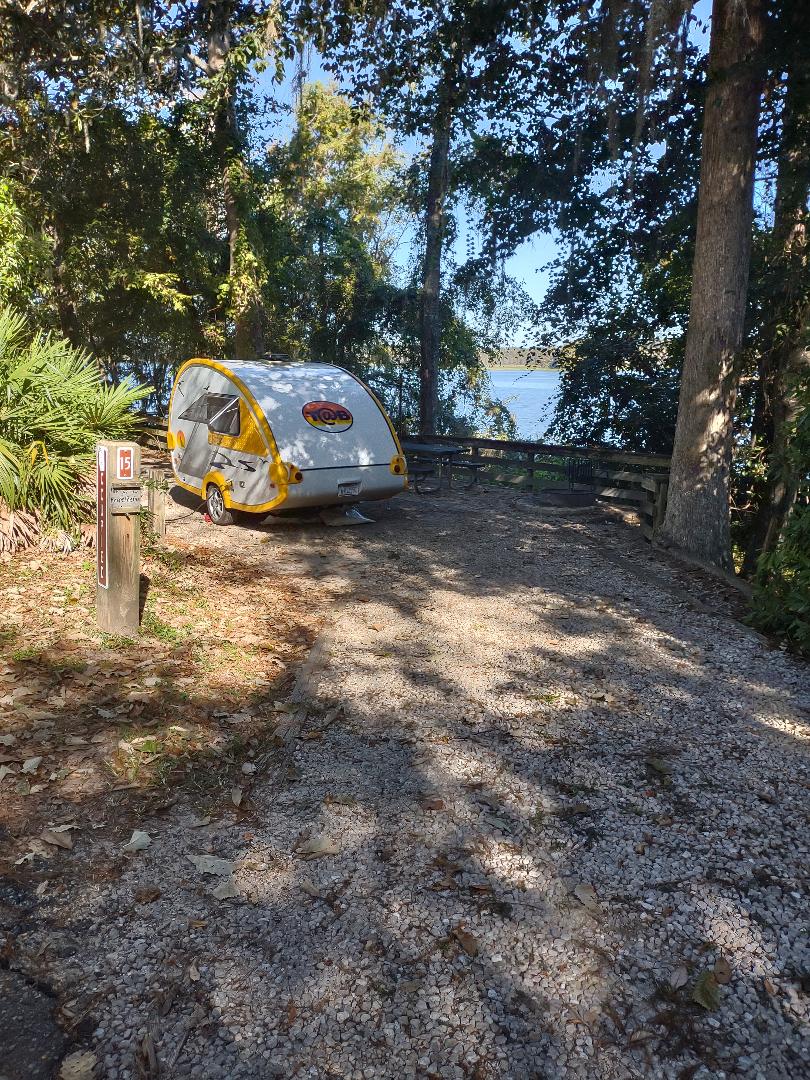
Marypat turned 70 in June and when asked if she wanted to do something special to celebrate the start of her new decade of life, she announced that she would like to take an extended fall vagabond with our little T@B trailer, and concentrate our time in the deep south. “I’ve never spent any real time down there,” she said. “I want to explore it.”

To tell the truth, I was skeptical. I hadn’t spent much time in the southeastern US either, and in lots of ways it almost felt like a foreign country – food, culture, accent, religion – all kind of foreign feeling, maybe not in a good way. And I admit to having a store of preconceived notions about the south, built out of a lifetime of hearing about civil rights protests, KKK atrocities, miscarriages of justice, and both religion and conservative politics on steroids. Beyond that, I wondered about the wisdom of gallivanting around the south in the heart of hurricane season. I mean, what could go wrong with that?? Never mind the normal conditions of heat and humidity common to that region that gave me pause.

Anyway, for much of the year we noodled around a variety of itineraries, possible destinations, people to visit, and tried to put together a coherent plan. It didn’t come together. In the end, we had a few commitments, a handful of people to visit, a bunch of maps, and a vague sequence of geography, but the rest would or would not fall into place as we went.

So now we’re back. I can report that it did manage to fall into place. It’s almost mid-November and we pulled off a two month road trip that met the bar for Marypat, and managed to surprise me (in a good way).

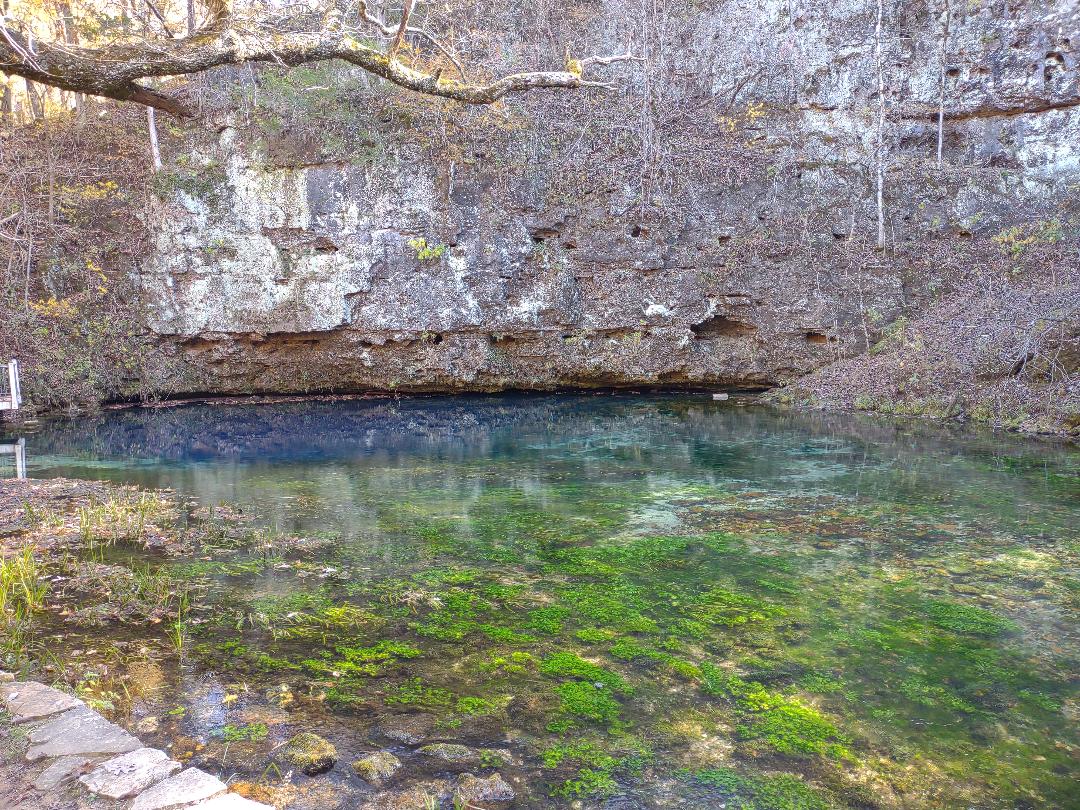
Birthday girl on a hike to Blue Spring, Alabama

SOME VAGABOND STATS:

  • from door to door, we were out 59 days;
  • 16 states, several more than once, as follows: WY, CO, NM, TX, LA, MS, AL, FL, GA, NC, TN, KY, IL, MO, KS, NE;
  • no fender-benders, parking tickets, fines, or mechanical issues;
  • one 5 lb. propane bottle for heat and cooking, with plenty left over;
  • paid nights camping 29 – these ranged from FS campsites that with our Senior Pass cost us $2.50, to RV campgrounds and well-appointed state parks (shower, elec. hookup, laundry) from $20-50;
  • free nights 29 – dispersed spots of various stripes, staying with friends/family, and free campsites;
Tabby camp near Tallahassee, Florida
  • fewer than a dozen meals out;
  • altitude range: from below sea level (New Orleans) to 14,200′ (Mt. Yale, Colo.);
  • state high points: Mt. Wheeler (NM), Kuwohi (TN) (formerly Clingmans Dome), Taum Sauk Mtn. (MO);
  • river time: Arkansas River between Buena Vista and Salida, CO; Current River, MO;
  • weather: remarkably good – three or four showery days, some rain at night or while driving, but essentially no weather-bound days, and the hurricanes this season stayed out in the Atlantic and didn’t even peripherally effect us. Heat and humidity didn’t bear down on us except for a couple of days in eastern Texas and around New Orleans.
  • notable wildlife sightings: javelina, armadillo, alligator, desert bighorn, limpkin, manatee, scissor-tailed flycatcher, pileated woodpecker, diamond-backed rattlesnake . . .

RANDOM AND UNSCIENTIFIC IMPRESSIONS:

  • the south has more churches than you can shake a finger at;
  • from Texas east there’s a lot of “y’all”, “yes sir/maam” and “have a blessed day”;
  • the southern accents weren’t over the top, with the exception of “boiled peanuts” which in a southern drawl sounds a whole lot like “bull penis” – just sayin’;
  • more people than I expected camping in tents, even in poor weather;
  • some folks idea of camping involves golf carts for trips to the bathroom and watching football by a campfire on a television mounted on the side of your monstrous rig;
  • Dollar General is the most ubiquitous grocery store throughout the south, combined with corner convenience stores in what often felt like food deserts;
  • the south is like anywhere else – mostly nice, friendly, helpful folks – and quite a range of economic status, from ostentatious wealth to abject poverty;
  • pit bulls and their ilk are very common;
  • everyplace, from Mississippi to Nebraska, has stuff worth checking out . . .
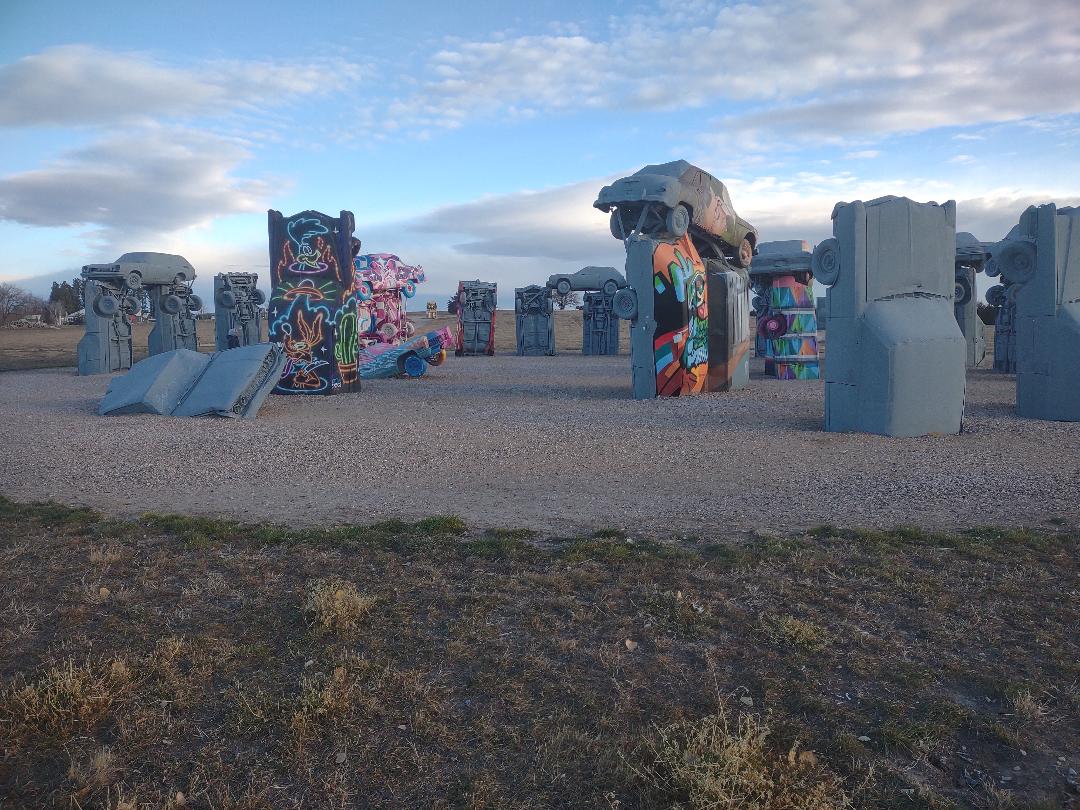
Carhenge, Nebraska – who knew?

SOME TAKE-AWAYS:

  • start out with a sack of quarters to handle laundry stops;
  • sprinkle in visits with friends/family but limit them to 1-2 nights – enough to catch up and get a sense for their scene, but not overstaying;
  • 2-3 nights seems like a good length stay in most places – you get in a couple of hikes and sights and then move on;
  • solicit and pay attention to local intel/tips – they lead to off-the-radar gems. In our case suggestions from locals led to really stellar campsites, dispersed camping in spectacular and unvisited terrain, under-appreciated points of interest and quirky highlights. Some of the more notable suggestions on our trip led us to places like: a campsite overlooking the Rio Grande gorge in northern NM; San Lorenzo Canyon in central NM; Sitting Bull Falls in southern NM; an amazing desert botanical garden outside of Ft. Davis, TX; Balmorrhea St. Park in west TX; Manatee Springs, FL; a seafood festival in Cedar Key, FL; a couple of scenic train rides (Pikes Peak, CO and Blue Ridge, GA); Bankhead National Forest, AL; Carhenge, NE, and more;
Sipsey River Wilderness, Alabama
  • take paper maps and study them, along with the Gaia app to discover out of the way trails and cool stuff. Our map/screen study revealed such highlights as the Blue Ridge Scenic Parkway, the Natchez Trace Scenic Parkway, Meriweather Lewis’ gravesite, Natural Bridge, AL (longest natural rock bridge east of the Rockies), hikes in the Sipsey River wilderness of Alabama, a charming alley art gallery in Hattiesburg, MS, a Pawnee museum in Kansas, Wichahpi Commemorative Stone Wall near Muscle Shoals, AL, and more;
  • the government shutdown during our trip forced us to concentrate more on state parks and features than national parks and federal lands. It was eye-opening. Most states have dozens, even hundreds, of state parks, many with campgrounds with amenities. They are state parks for a reason, are worth exploring, and are usually less crowded and bureaucratic than federal lands/parks;
  • being self-contained is key. We always had water jugs filled, ice for the fridge and food for a couple of days, so if we ended up in some remote and dispersed spot for a day or two we had our comfy and fully stocked home base;
  • the biggest take-away from our time on the road is that I now understand how people can spend years knocking around the country. We truly only scratched the surface of possibilities. In Florida, for example, we hit maybe five state parks and other venues, but there are more than 100 state parks in that state alone. We only spent two or three days in Mississippi. We had a three-day paddle on the Current River in the Ozarks of Missouri, but there are a dozen river possibilities in that region begging for our attention. You could easily spend a month in most of these states and still not get to the majority of worthy sights. At one point our daughter, Ruby, asked us if we were homesick. Actually, no, not at all. Being on the road is such a different dimension that it takes on a life and immediacy of its own and the rest of existence sort of fades into the background.

All that said, it feels really good to be back. There is something satisfying and grounding in having a home base, a daily routine, family and friends to spend time with, traditions to uphold, events to participate in. We are both looking forward to diving back into that scene and girding up for a winter of skiing and community. But the vagabond life has its compelling elements . . . enough so that this may not be the last road tour for this crew.

Posted in Uncategorized | Comments Off on 70th Birthday Vagabond

Year Eleven

Who knew it would come to this . . .

When I sent out that whimsical invite more than a decade ago to a couple dozen paddling pals, I didn’t expect much. Maybe four or five friends would be interested in collaborating on my Memorial Day fantasy, and maybe it would be worth doing a time or two. I was completely ambushed by the unanimity of response. Damn near everyone was in. And damn near everyone has stayed in, year in and year out, good weather and bad, trusting that the shindig will be worth it. Actually, the group has continued to evolve. Participants come from as far away as Prescott, Arizona and Bainbridge Island, Washington. People invite a friend, kids join in as schedules allow, new members come along. Every holiday weekend in the last part of May, some twenty-ish folks show up on time, self-contained, ready to go. No whining, no negotiating, no excuses . . . all in. It’s pretty satisfying to know that on a bunch of our friend’s yearly calendars have Three Rivers blocked in over Memorial Day weekend. And not long ago we were having a family conversation about everyone’s favorite holiday. Our son, Sawyer, said, “Memorial Day”. How many people say that Memorial Day is their favorite holiday of the year?? But once he said it, I was, like, “Yeah, mine too!”

Every year the crew rolls in to some designated campground for the first night, grabs or shares a site, and the socializing begins, a reunion after the long winter, a re-connection with friends we haven’t seen for months, or maybe since the last 3 Rivers. We gather around a central campfire where the hubbub of conversation continues – updates, transitions, travel ideas, health issues, catching up. There are usually a few dogs in the mix, some of the younger generation, a few people who come along for the social part and maybe not for the paddling part. Whatever.

Every day we corral up at some riverside put-in – a bridge, a fishing access, a wide spot on the road – and blow up boats, discuss strategy, manage a shuttle, get everything stowed, and down the river we go, discovering new water bend by bend, fence by fence, logjam by logjam, beauty by beauty. There are always discoveries, surprises, and potential for comedy/mishap. So far, so good in terms of any dire consequences. The next day it happens again – another put in, another new bit of current, another set of revelations. And the next.

What’s interesting is that if you look at floating guidebooks about Montana, you’ll see a handful of major rivers covered – the usual suspects . . . Yellowstone, Missouri, Flathead, Clark Fork and their significant tributaries. We have now done 33 sections of current (not counting a pretty healthy handful of bonus rivers added to the weekends) and only a few of them are included in the usual lexicon of paddling destinations for the state. These are, mostly, off the radar destinations, often unknown to any of us before we put on, usually pretty seasonally ephemeral. Sometimes they qualify as epic descents full of challenges (think Grasshopper Creek, Silver Bow Creek or upper Big Spring Creek). More often they are unexpected gems of flowing water you vow to return to another time (think St. Regis River, the East Gallatin, Fischer River, or the upper Boulder of the Jefferson).

This year was no exception. Once again, I’m tempted to say it might be the best year yet, but I was tempted to say that last year, too. The weather was exceptional. Clear and warm and fresh. We camped along the North Fork of the Teton River, way up in the foothill canyons of the Rocky Mountain Front west of Choteau. The water looked lowish, but possible. On Day 1 we gathered at the bridge adjacent to camp and revved it up. The river was clear and fast and cold. Bend after bend we dodged down through boulder gardens, managed a few stouter bits of watery challenge, found our way past sheer canyon walls, outbursts of wildflowers, deep pools. It was busy but not scary. A couple of fences near the end, but nothing difficult. No mishaps. Plenty of fun. Beauty all around.

Day 1 launch on the North Fork of the Teton River near Cave Mountain

Day 2 was the biggest outing. At my daughter, Ruby’s, suggestion we jumped a couple of drainages north to paddle Birch Creek, along the southern boundary of the Blackfeet Reservation, below Swift Dam and in the shadow of the high peaks. The shuttle was somewhat heroic, but we got an earlier start and were on the water before noon. It was a stretch no one knew anything about. We could see a quarter mile down from the put-in and a quarter mile up from the take-out bridge. In between, a mystery. The first mile or two was iffy with tight channels, logs, and braided shallows, but we soon emerged into a quiet valley with this clear, rock-flour tinged water chuckling past limestone cliffs, dropping over small ledges, purling through shallows. Along the banks, carpets of lupine, craggy cliffs, empty and quiet country. So damn beautiful and calm. The one punctuation that came as a surprise was a 20′ waterfall over a limestone set of ledges that we were lucky enough to eddy out above and portage past. Other than that, just mile after mile of austere high plains loveliness. What a sweet day, and a long enough one that we eschewed the evening fire and hit reset a bit.

I’m a little tempted to start calling this enterprise ‘2 and 1/2 Rivers’, because on Day 3 there is always a contingent that takes a pass, or opts to take a hike instead, or needs to get home for something. As a result the final bit of water tends to be shorter and less than fully attended. This year was no exception. Most of the crew headed for one of several nearby trails, while it was down to three solo boats piloted by Sawyer, Marypat and me. We drove about 4 miles above camp to the next bridge put-in on the North Fork of the Teton. Again, pretty bony, but it looked possible. And it was bony. I’d call it Class V Busy as we dinked and dodged our way down those miles. Back to camp in about an hour, where we were able to portage the boats right up the riverbank and into our campsite. Pretty handy.

As has come to be the case in recent years, a few add-on rivers to take advantage of spring runoff are an option after the official weekend. On the Tuesday following the holiday, Lee and I headed over for the Sluice Box section of Belt Creek and added another stellar day to the event before heading for home.

The unexpected tradition lives on. Every year we get older. Every year we feel luckier. Every year we promise another one. I mean, why the hell not, right??

Posted in Uncategorized | Comments Off on Year Eleven

Well . . . That Happened

Criminy!

Before the election I adopted the stance that our country had not descended to such a level of depravity that we would actually elect a candidate like Donald Trump. I just wouldn’t accept that possibility.

And I was wrong. We went ahead and did just that. And ever since I’ve been trying to wrap my head around it. It’s easy to simply call your opponents idiots (I know, cause I’ve done it plenty). But really, how is it that the majority of voters listened to what Donald Trump said this past decade, watched what he did and tried to do, witnessed the way he treats people . . . and then said, yeah, that’s my guy??? I truly don’t get it. How is that even possible?

I’ve been mentally trying to braid together the strands of explanation that might deliver some sort of answer. I’ve come up with a couple, and am open to more.

First, for decades now the Republicans have been busy trying to make it harder to vote, and particularly difficult for those most likely to vote against them. Gerrymandering, removing ballot drop boxes, closing polling stations, creating whopping lines and waiting times, and culling the voter rolls of hundreds of thousands of potential voters. Much as they have whined about voter fraud, when it comes down to it, most of the instances of actual fraud have been perpetrated by republicans, and the efforts to simply create roadblocks to voting have, indeed, made a significant dent in voter turnout.

Second, there is no discounting the latent presence of misogyny and racism in our culture. Turns out that a lot of our fellow citizens simply will not vote for a woman, any woman. It was clear as far back as Shirley Chisholm and Geraldine Ferraro. It was true for Hillary Clinton, and I believe it was a factor again for Kamala Harris. Again, I don’t get that, given the number of successful women politicians around the world, but it’s a thing in America. Racism rears its ugly head too. Obama managed to get by it, but the blowback was ferocious. Sad to say, but a whole lot of white voters in this country won’t get behind a candidate of color, even when the other candidate is as unbelievably flawed and dangerous as Trump.

Third, the level of propaganda and disinformation these days is gobsmacking. It’s the age of information, but so much of it is bad information, or targeted information, or superficial information, or simply mendacious information. Everyone, including me, is isolated in their information silo, being fed what they want to hear, what reinforces their beliefs, and leading them down rabbit holes rampant with bullshit, all dressed up to appear reliable and true.

Then there’s the Electoral College, but don’t even get me started on that piece of garbage.

So here we are. We’ve gone and put the fox firmly in the hen house. He’s told us the plan. Prepare to cope with it. Do Trump voters actually think their health care will get better and more affordable? Do they think their freedoms will be expanded and protected? Do they think their retirement will be more secure? Do they think democracy and freedom will shine bright? Do they think the rule of law and the Constitution will be followed and respected? Do they think that the women in their lives will feel protected and supported?

Yeah, well, good luck with that. Be careful what you wish for, because you may be in for a pretty rude wake up call. I think we’re in for an era of political corruption unmatched since the early 1900s when the titans of industry, including our very own Butte Copper Kings, were gleefully pulling the levers of power. And guess what, that isn’t going to benefit 99% of the people who filled in the blank next to Trump’s name.

As for me, I’m not listening to ‘news’ anymore.

Posted in Uncategorized | Comments Off on Well . . . That Happened

Comrades

My friend, Joe, is an avid nordic skier. The kind of guy who gets out 100+ times a year on his skis. His definition of summer is “three bad months of skiing”. For me, it’s about paddling, and for me, an equivalent definition of winter might be “four bad months of paddling”. On a good year, the river time starts in March, with a jaunt south to, maybe, the Salt or Gila or Verde. On the other end of the season, I might well head off for a final float in mid-October, as I did this year when I joined friends on the Desolation and Gray Canyon section of the Green River, in Utah. March through October, with an occasional blip in mid-winter, say, to Big Bend, or Florida, or the lower stretches of the Colorado . . .

In between, there are many days on local stretches of water, places I’ve cruised down dozens and dozens of times. There is the annual Memorial Day shindig, rife with unexpected hilarity and community. There might be a northern expedition to a remote and big-hearted quadrant of empty country. There are top-to-bottom watershed explorations, nights on river banks, hikes up to the rims, whitewater rushes, calm dawns, weather to deal with, new currents and familiar ones, camps to make, rapids to assess, surprises, challenges, a few accidents, contemplation, and the repeated, welcome doses of ‘river time’ consciousness.

This October, on the Green, it was the usual thing. A group of us got together, a society of folks who were on the invite list, had the time and flexibility, fell prey to the seduction of another outing, and who gathered at the put-in from our various points of origin. In this case it was a group of five guys. Most of us knew each other, some better than others. All of us were seasoned in the outdoors. Everyone came self-contained and ready to load into boats.

Fall was coming on in the turning yellows of the cottonwood trees and the cooling nights. The river was quiet. The glut of summer boaters had ebbed to a few groups strung out along the corridor. We endured one 24-hour interlude of rain, during which we stayed put, hunkered under a kitchen tarp or in our tents. The river rose, turned brown with silt. We ran rapids, boats lining out one after another through the waves, past rocks and ledges, down dirty tongues of river. We stopped to scout a few more notable spots, talked at some length about strategy, went back to our boats and attempted to execute said strategy with varying degrees of accuracy. We took walks. We played cards. We told stories, made connections, disclosed secrets, shared visions, remembered past exploits and imagined some to come.

Like I said, the usual thing, and special for that. I have come to treasure the competent companionship on these exploits, the company of people who know what they are doing, who are unfazed by difficulty, who handle themselves with grace and style. These journeys, gaggles of people riding the back of current, are nuggets of experience, each unique and memorable, each quietly fulfilling. Sometimes it is me alone, a society of one. Often it is with Marypat, or with an old friend. Or it can be a group – four or six or twenty-five of us scattered down a glittering ribbon of water in colorful boats.

What is so satisfying is the unstated competence and experience that underlies the outings. People who know how to set up a tarp in a storm, who can start a fire with wet wood, who can tell the difference between a rapid you can read-and-run and one that requires a scout, who know how to pack up and go without fuss, who can bluff a bear that is probing the edge of camp, who can look at a map and make sense of it, for whom long interludes of silence riding the skin of water are not uncomfortable, who know what a beautiful paddle can do for you, who can admit to fuck-ups, and then make up for them.

I am blessed with a community of such companions, including my children, who possess the skills, have the experience and judgement, and the sensibility to be good partners on a journey. It is a treasure to savor over the four months of bad paddling, and to anticipate again when the thaw finally comes and the next dance begins.

Posted in Uncategorized | Comments Off on Comrades

HOW LUCKY AM I?

It’s a tad stunning to think that in the past five years, I’ve been fortunate enough to pull off four northern expeditions. The Mountain River in Canada’s Northwest Territory with some of our kids and partners, then a month on the Noatak in northern Alaska with a crew of 10 friends, then the Elk River in the central tundra barrens of Canada with a crew of guys, and then this year, paddling for more than a month on the Horton River, above the Arctic Circle in the Northwest Territories. I’ve adopted the theme of ‘keep on doing it as long as I can do it’, knowing that journeys like that after retirement are numbered.

Kind of crazy that I’ve been able to join these journeys, that I have the financial ability to make it happen, that I have adequate health to manage it, and good companions to adventure with – from kids who put up with us oldsters to peers who count themselves as lucky as me.

This time there were five of us. Lee James from Arizona, who proposed the idea and organized much of the logistics. Joth and Louise Davis, long-time adventure partners and great companions, and the two of us. Three folding pakcanoes, plenty of time in the itinerary, and trusted partners who pull their weight and bring competency to the equation.

So, we all drove to Yellowknife (25 hours from Butte) figuring that carrying all our gear and avoiding the pitfalls of commercial air travel was worth it. (It was!) From Yellowknife we flew to Norman Wells on a commercial flight operated by the same outfit that flew us to our put-in by float plane (yes, a commercial flight, but an outfit that understands the challenges of expedition freight). After a night at an outfitters base we flew via Twin Otter to Horton Lake, where we landed within a few yards of the connecting stream that leads to the Horton. 33 days later, 350ish miles downstream, within shouting distance of the Arctic Ocean, we were picked up on a gravel bar by a wheeled Twin Otter and flown out to Inuvik. After a day or two there, and some wrangling over air cargo, we flew commercial back to Yellowknife. Of course, our gear didn’t make it with us, so two of us had to wait an extra day in Yellowknife for the gear to finally arrive (another lesson in the shitshow of commercial air travel). Our conclusion . . . never do northern trips that depend on commercial airlines.

Kudos to Lee for picking a trip perfect for the old fart set. No big lakes to get windbound on. No horrendous rapids requiring long portages. River current the entire way. Through the portal we went, into that wild dimension free of outside news, political drama, household chores, family squabbles – truly on river time. At one point I posed the question to the group – which reality is the real one – the one with Trump in it, or the one with the Horton River flowing through it. The response was unanimous, and unsurprising! Our calendar allowed for a leisurely 12 miles/day average, which was quite sedate and doable. By earning more miles, we kept awarding ourselves with rest days – 11 of them during which we could hike the tundra expanses, observe wildlife, entertain ourselves in camp, swim, read, fish, and hang out.

Wildlife along the way was consistent and rewarding – a great look at a wolverine on shore, almost daily sightings of lone caribou, a couple of distant looks at musk ox, probably 10 barren ground grizzly, and a family pack of wolves who howled at us from behind our camp. Other highlights included three canyon sections with varying degrees of whitewater, most of it quite doable; river current that was clear as gin, sliding along with a kind of seamless grace that was mesmerizing; some whopping fossils embedded in limestone; paddling with my partner in life, with whom I’ve shared many thousands of miles in synchrony; only a few episodes of crappy weather or strong headwinds; some remarkable glimpses of smoking ground from smoldering coal deposits in the Smoking Hills near the end of the river. And, most astonishing in these times, not one sighting of another human in more than a month! How often does that happen?

On the down side, we witnessed sobering evidence of climate change at work – permafrost ‘blow-outs’ along the banks, slumping banks and hillsides sliding into the river and collapsing terrain everywhere. As Lee noted, “I’ve studied geology a lot, and I have no explanation for what’s going on here.” Also, some very smoky days whenever the winds persisted from the south, evidence of distant forest fires.

What a sweet way to spend a month, watching the evolving terrain of a long river slide past, playing mental Wordle to pass the time as we paddled, seeing animals free of humanity in their element, and relishing the time and mental space to indulge deep conversation and contemplation. And, at the end, hiking to a ridge from which we could see the shining Arctic Ocean shimmering in the distance.

Do we have another journey like this in us? Stay tuned.

Posted in Uncategorized | Comments Off on HOW LUCKY AM I?

Three Rivers 10.0!

There are these occasional benchmarks by which we gauge our progress through life. Reality checks. Gut checks. Ambushes. Our kids graduating from college, our enrollment in Medicare, the advent of retirement, parents passing, decades rolling past like the rhythmic click of an odometer going a tad too fast for our liking. All leading to those who-is-that-person-in-the-mirror moments.

This Memorial Day weekend was the 10th rendition of the quirky and surprising tradition of 3 Rivers, a long weekend devoted to boating three stretches of water (often notable for their ephemeral, sketchy and improbable availability) and camping out between. What started as an impulsive suggestion with no real expectation of longevity has become a fairly entrenched event that folks plan their calendars around. Participants range in age from 25 to 75 – students, contractors, doctors, artists, lawyers, teachers, nurses, guides . . . Boating skills also vary widely, although the group is quite competent in Class II – III water, and has handled some decidedly exciting moments with barbed wire, diversion dams, more whitewater than expected, less water than expected, low bridges, logjams, lethally thorny vegetation, portages. A good number of the runs have been first descents for all with surprises lurking around every bend.

The key to success and the essential ingredient to group chemistry has been the willingness to show up self-contained and prepared, ready to join in at whatever level is comfortable, and take part without complaint or protracted negotiation. Set the date, time, place and whoever comes appears, remarkably on time and fully prepared to jump into boats and head downstream. A rare group quality.

A decade ago, when this started, most of us still camped out in tents, or threw down in the backs of trucks. These days almost everyone wheels in with camper vans, trailers, slide-ins or other forms of relative comfort. A decade ago most of our kids were still in school. Now most of the kids are on some sort of career path and are behaving remarkably like adults. Some of us are grandparents now. A decade ago hardly any of the conversation was health related. These days, there’s a lot of campfire talk about prostates, joints, kidney stones, friends who have been ambushed by dire emergencies, heart surgeries and the like. So yeah, the wheels of time keep grinding along, reminding us to keep pushing the envelope while we still can.

This year was something of a departure, in several notable ways. First, we decided to extend the weekend into the following week, and recapture a sort of ‘best of’ tour of repeat rivers that stand out in the medley of 30 stretches of water we’ve enjoyed. Second, rather than taking on three different rivers, this time we ran three sections of the same river – the Stillwater River spilling out of the Beartooth Mountains and making a beautiful run to its confluence with the Yellowstone River near Columbus. Third, we were joined by Larry Laba, the founder and owner of SOAR inflatable canoes, who has bequeathed the group with a bevy of his blue boats and played a big part in our continued enjoyment of whitewater and river life. Larry showed up with two good friends, Bob and Ken, joined in for all three days, and brought SOAR tee-shirts for everyone.

This year’s weekend logistics were about as efficient as possible. The usual cadre of roughly 20 folks showed up. We camped in a riverside campground (Castle Rock) that served as the take out for the first day and the put in for the second. On the third day we all broke camp and bumped downstream for the final stint. The Stillwater, it turns out, is not at all still. It cascades out of the mountains and rips along the valley at a stout clip through bouldery stretches. We hit it before the snow came out, so we had a pretty technical, rock-garden time of it. (We ran it at roughly 1,100 cfs, but in the warm week since, it ramped up to 5,000 cfs). Day 1 took us from the picnic spot at Old Nye down to camp, roughly 10 miles of winding, pretty stream that ramped up into a hot stint of maneuvering through rocks for the last couple of miles. Day 2 was the main event, putting in at camp and engaging in pretty non-stop whitewater of a very technical nature for the entire 10 miles down to Cliff Swallow access. A lot of practice with draw and pry strokes, side-slipping, ferrying, punctuated with a few ignoble pinball descents. Then back to camp for the usual gatherings around fires, side conversations in one or another rig, drying and regrouping, taking naps. Day 3 was another 10 mile sluice from Cliff Swallow down to the Absaroka access. Not as demanding as Day 2, but plenty of action, bouncy water, quick maneuvering. All good. Seemed to me pretty clear that one of the other things that has developed over the decade is that the general whitewater skill level has amped up noticeably.

Everyone headed for home and a reset day before taking on the add-on week of rivers. On Wednesday there were 11 of us who showed up for a run down the lower section of Sixteen-Mile Creek from Maudlow to the Missouri. It’s a seldom run section of small river with a rather horrendous shuttle that winds its way though remote and panoramic ranchland, former railroad bed, wildlife-rich country (we saw elk with young calves and several moose). The river has a short window of navigability, but we got down it in style, despite a really dismal weather report (turned out to be not nearly as dire as forecast). At the end of that long day (made doubly long by the shuttle), most of us gathered at the Mavor’s for fish tacos.

Thursday was slated for Belt Creek, in central Montana. A group of 7 of us headed up. As we got close to the put in, we noticed a startling amount of newly downed timber everywhere. That spot had gotten 3-4 feet of snow and high winds the week before and was still working out of the mayhem. Our campsite was still being cleared by Forest Service crews and everyone was adamant that running the Belt was a really bad idea. Bummer.

We decided to take a hike up the lower (Sluice Boxes) section of the run as a consolation. Turned out to be a really nice hike, and along the way we were able to scout the river and actually see a raft go down. Based on new intel, we decided to stay afterall and make the run the next day. That run, from Monarch to Sluice Boxes State Park, might be the best single-day float in the state. We made our way down it on Friday, negotiating a few obstacles along the way, but generally finding it quite runnable and as awesome as ever.

Down to five now, we motored over to a campground along the Missouri River near the confluence with the Dearborn, our next destination. Lucked out with a great, riverside camp at Mid-Canon access, and got an early start the next morning for a run of the Upper Dearborn, from Bean Lake to Highway 200. That flow is unbelievably clear, running through stunning canyons and foothill country, with an occasional bigger rapid, one portage and lots of read-and-run rock garden. All in all, a very sweet day on the river.

And then there were three of us. Randy, Lee and I headed for the upper Boulder River near Basin the next morning. It was running at about 300 cfs and it looked bony as all hell. We questioned whether we could get down it without protracted hang ups, but there we were and off we went, starting near the Bernice exit, running down past Basin and the Merry Widow Mine (another story) and on to Galena Gulch campground where we left our rigs. It was really low, highly technical, but we managed to get down it without many hang ups and in somewhat breathless style. A jumpy, full-on, but very fun run back to camp.

The next morning Randy took off for home while Lee and I indulged a day off in Butte, punctuated by a memorable lunch at Mr. Hot Dogs. On the final morning of our week after, the two of us drove over to Rock Creek, west of Phillipsburg, for the last river in the line up. By this point, warming temperatures were bringing down the snowpack and the river was up to its seasonal norm, which meant it was charging along almost bank-full. We made the 16-mile run from Skalkaho Highway to the Windlass Bridge in roughly two hours, a fast charging cruise with a couple of deadfall pull-arounds, a diversion dam descent, and a side channel or two we shouldn’t have taken.

So, in the books. A reality check in just how quickly a decade slides past, a tribute to stellar group chemistry, another fun-filled slate of water, and a commitment to the next decade, wherever that takes us. 30 river sections in our wake, each memorable for its own character, a span full of comedy, hairball adventure, companionship, goofy antics, awesome moments, and zest for life. Keep bringing it on!

Posted in Uncategorized | Comments Off on Three Rivers 10.0!

AND NOTHING WENT WRONG

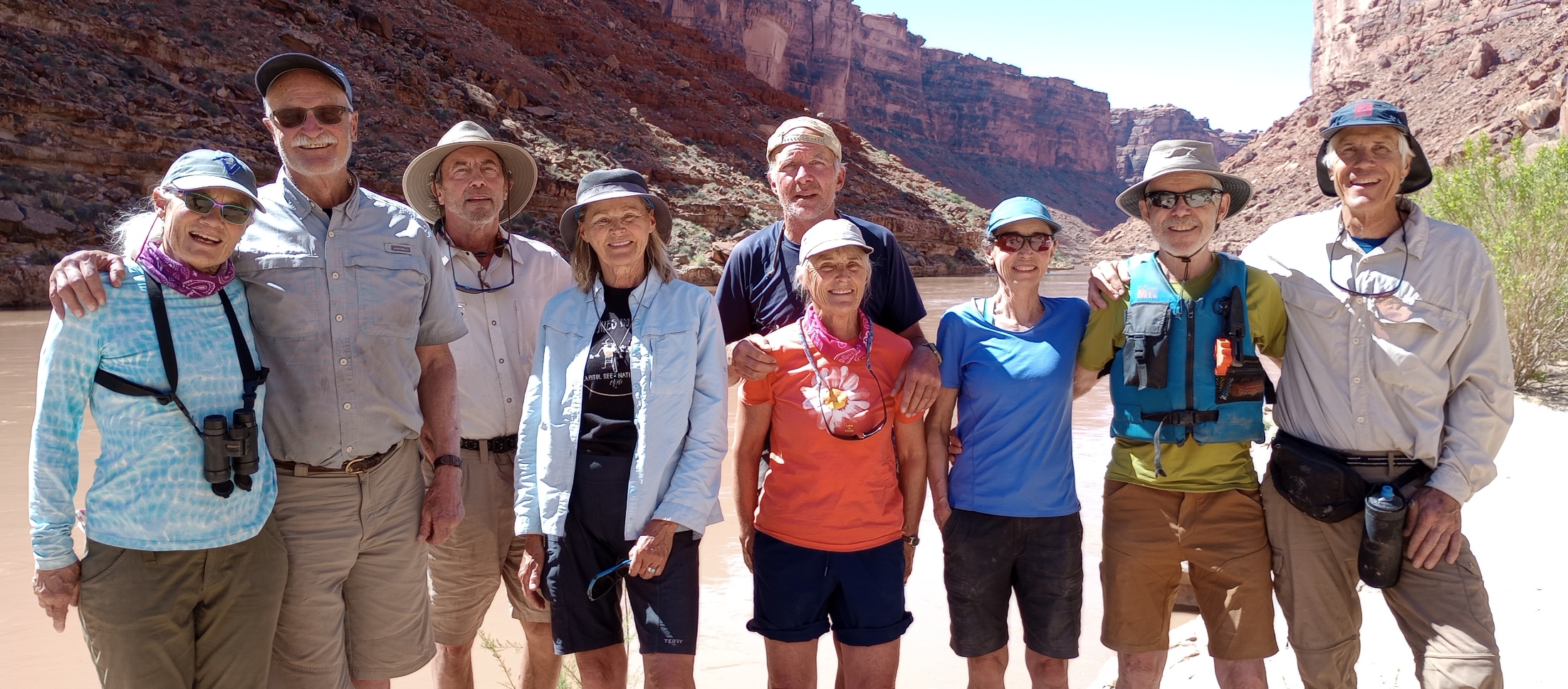
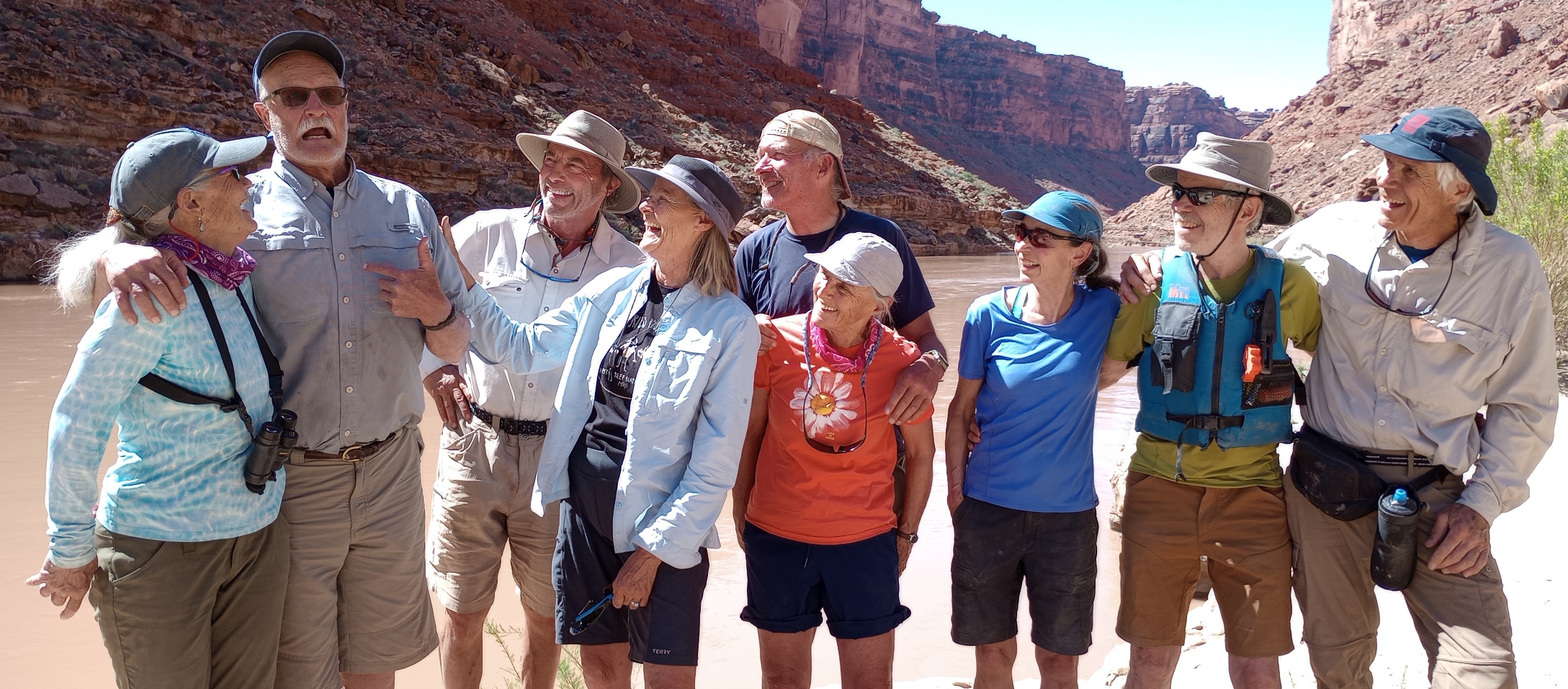
It always seems slightly miraculous that we can make plans months and even years ahead of an event, and on the appointed day and window of time, with people vectoring in from far and wide, everyone shows up at a pinpoint spot, ready to take part. In this case the pinpoint was Sand Island boat launch on the San Juan River, just outside of Bluff, Utah. Within a couple of hours of each other, on the appointed day, nine of us vectored in from points as disparate as Germany, Texas, New England, Montana, Oregon and Colorado. And the following morning we retooled from cars to boats, met and paid our shuttle driver, packed boats, parked rigs, filled up water jugs, ferried gear, made sure we had spare car keys, and otherwise unplugged from society and slowed down to the pace of the river. Off we went, one raft and four inflatable canoes, on the somewhat tardy but long-awaited inauguration of the 70s iteration of our decade-themed group of friends.

It was my trip to plan and organize . . . so far so good. We had been sporadically corresponding about the details for months, but now we were on the river, for better or worse, and it felt like better. Along the way we’d had collective craven moments of weakness and doubt – what if the weather is shitty? What if my car isn’t up to the shuttle road? What if we need to pull out early if things aren’t going well? All of it was either ignored or placated and to everyone’s credit, once the die was cast, everyone showed up with an ‘all in’ attitude firmly in place.

The San Juan River has looped its way through my life. I first ran it back in the 70s in an aluminum canoe, before permits were required, before I’d developed much in the way of river skills. Since then I’ve been back many times, on various portions of the reach, as early as March and as late as November, at various water levels, in all sorts of weather and watercraft, noting the changing popularity of the float, the increased regulation, the evolution of ripple effects wrought on the river by Glen Canyon Dam and Lake Powell. In that time I’ve slowly gained knowledge – best camps, best runs on Government Rapid, when it’s best to portage or line Government Rapid, side hikes, little known gems of landscape.

For nine days we dawdled our way down the winding course of this magnificent desert tributary of the Colorado. It’s a trip you can complete in 5-6 days, but we adopted the retirement pace, taking side hikes to ruins, up old Mormon trails, up Chinle Creek, rimming out at the top of Honaker Trail. We relaxed in camps, played cards by headlamp, dipped in eddies, found pottery shards and granaries and petroglyphs, endured sand storms, rinsed off in pools, felt the presence of the indigenous people who once thrived there, told stories, listened to canyon wrens, spread a friend’s ashes from the exposed and dramatic platform of Horn Point, coasted through the deeply incised Goosenecks, slapped through rapids, wandered up side canyons.

I kept waiting for the shoe to drop, for the inevitable catastrophe that seems all trips contain at some point, but it never happened. Things kept falling into place. The poop bucket didn’t overfill. We were able to refill water at Mexican Hat. The weather stayed stable and benign. Everyone got along. No one blew it in the whitewater. Day on day the canyon held us in its spell as we beetled along under the dome of desert skies – this gaggle of old farts still finding adventure and camaraderie and health. Blessed with luck and verve and the wherewithal to pull off such exploits.

We aren’t lawn bowling yet!!

Posted in Uncategorized | Comments Off on AND NOTHING WENT WRONG

Dots and Circles

I don’t know, maybe it’s an age thing. Maybe it’s the sentimentality of the holiday season . . .

Could be that I turned 71 and am more acutely aware of loose ends, and also of the cycles looping through my life. It’s not a ‘bucket list’ impulse. I’ve never had the cliche urge that seems to infect old people with the fever to jump out of airplanes or walk across beds of red-hot coals.  Not that, but there is something going on, some satisfaction in taking care of unfinished business, and also, the need to pay more intentional tribute to the circular seasons that ebb and flow through the course of a lifetime. It manifests in my attention to connecting the dots along incomplete trails I’ve begun, or left in segments. And in the deepened awareness of the swirling patterns I’ve become incorporated in by nature of my family, my unique history, friendships, quests, quirky traditions, and the steady, inexorable currents of time. Trails completed. Circles closed.

Not that this is something ever done, because just as a box gets checked, a new one opens up. New cycles initiated, new trails begun, fresh awareness, some physical and tangible, others emotional and only vaguely understood. Still, something’s going on, and it seems to have come into particular clarity for me lately.

Like I say, some accomplishments are very tangible and concrete. Fulfilling an ambition to float the Gila River, in New Mexico, last March, for example, which has dangled out there in my imagination since I lived in Santa Fe in the 1970s. Getting around, finally, to running the Rogue River in Oregon, which has been somewhere on my river-running radar for probably forty years. Who knew, after all those failed lottery applications, that you could just show up and score a permit, which I did with my oldest good friend, Grant Herman, in September. Or, in late August, with Marypat still navigating her knee-replacement recovery, the final 100-mile piece of the Clark Fork River between Butte and Paradise, Montana. Somewhere in those four paddling days, a revelation – “Hey, look at me!” she exclaimed, “I’m kneeling!”.

The meaningful return to a summer canoe expedition in the Far North, with a band of six guys, most of them strangers. Those extended, logistically-challenging, expensive expeditions have a poignant flavor, because who knows which will be the last I’m capable of. I had that same pang of uncertainty when we did the Mountain River with the kids, or the Noatak with a band of friends. For a guy who has no history of making the ‘cross’ to mark a blessing, I am tempted by that gesture at the successful conclusion of each one of these journeys. How lucky am I, I think, every time.

In the vein of traditions, we are logging the 10th year of our Three Rivers gathering, that Memorial Day glut of quirky river sections with a boisterous gang of paddling friends. This spring will be a decade-marking week of rivers in celebration of a tradition no one knew would go anywhere or last even one year.

This has been a particularly rich year for family ceremony, as we managed to corral nearly 30 of us for a summer reunion in Maine, where the tapestry of familial fabric came together, created new patterns, and reinforced old ones while cracking lobster tails, walking the trails of Acadia, oogling new family members, and memorializing Aunt Judy on a bluebird day along the Atlantic shore. Most of us also came together to celebrate the long life of my Aunt Noey Congdon, in Denver. She was the last of her generation to pass the torch, and hers is an indelible legacy of fierce integrity and absolute grace.

It struck us this year how our celebrations seem evenly divided between the youthful outbursts of weddings and births, punctuations of exuberance put on by the contemporaries of our kids, and by more somber gatherings to remember those who pass on, mostly our contemporaries and our elders. In that way we teeter at a crux of comings and goings, joy and grief, dancing and comforting. The passing of energy and the anticipation of a future with new and unknowable forces at work.

Here in Butte we remember last winter held fast in the grip of old-time cold and snow. By this time last year we’d already been out skiing probably twenty days, and we were in for a season of minus 40 cold and unrelenting snow. This year, in the final days of November, I climbed a nearby mountain through a skiff of snow in shorts and a tee-shirt. My back is thankful, and anxiety about pipes freezing and whopping heat bills is reduced, but it’s another mark of the cycles we all play our roles in or are forced to live through.

All of it expressions of the great river of existence bearing us along. Headlong descents, quiet pools, swirling eddies and whirlpools, foam-laced drops, serene dawn mists, fearful unknowns, comforting serenity. Another bend left in our wake on this daunting and awesome expedition.

Posted in Uncategorized | Comments Off on Dots and Circles

The Decade Saga

It was Kimmer’s brilliant idea, more than 20 years back. “What if,” she said, “as each of us reaches 50, we propose a trip and everyone else shows up for it?” A novel and intriguing challenge.

Everyone else, in this case, is a group of 8-10 of us (somewhat variable depending on partner participation) who have all been united by a zest for adventure. Some of us have known each other since college. In various combinations we have ventured off together on backcountry jaunts for roughly fifty years. Exploits that range from the epic and serious to the ribald and silly.

We all signed on, but hey, talk is cheap, right? The wreckage of failed brilliant schemes dots the arc of human history, a junkyard full of the skeletons of big talk and not-so-big action.

It turns out that I was first up, back in 2002, and it has earned me the tag of Elder ever since, whatever that means. I have the advantage of being alone in my year, which makes me a dictator free of any obligation to negotiate. And that’s a bigger advantage than you might think.

The 50s decade went largely according to plan. My outing took us down the Continental Divide spine through the Anaconda/Pintler mountains in SW Montana for a week. Over the years, with some fluctuation in group size, we sallied forth through the Kootenai Mountains of British Columbia, made a south-to-north traverse of the La Sal Mountains in Utah, and finished up with a week in Glacier NP in Montana. All more or less on time, with a few wobbly planning moments (notably on the main drag of Moab in 104-degree heat trying to decide where to go). All pretty robust multi-day outings full of goofy games, comical food hanging episodes, unbelievable blooms of Indian Paintbrush, kick-stepping up snow couloirs, morning yoga in mountain meadows, skinny dips, and grizzly bear encounters at 10,000’.

Before I knew it, my turn came around again to kick off the 60s iteration. I picked a hike in Escalante, notable for poison ivy, gobsmacking canyons, and hilarious swims with packs through route-blocking pools. Timing got a little less rigid in the second decade. One team who shall remain nameless dawdled more than five years before finally pulling off a base-camp, day-outing week in the Methow Valley of Washington, a medley of hikes, floats, bike rides, and game nights. Another team put together a moving base camp week in central Utah, featuring petroglyph panels and slot canyons. An eclipse-focused, horse-pack assisted hike and basecamp outing in Wyoming’s Wind River Range rounded out the journeys.

Notice the slippage here, from outright Point A to Point B backpack trips to base camp forays, help with carrying gear, less sleeping on the ground, more vehicular shelter. Sixty may be the new fifty, but still . . . By the end of that decade jokes about trips devoted to shuffleboard and lawn bowling were more prevalent and less far-fetched.

Now, signs of the creep of age haunt us more dramatically as we enter the decade of the 70s. I go first again. There is some wiggle room on timing, spanning both the year you turn 70 and the year following your birthday, before you turn 71. Well, I’m about to turn 71 and I’ve only partially gotten around to my outing. I looked seriously at the year preceding my birthday, but things came up. Namely, for me, a diagnosis of and surgery for prostate cancer. Kind of focused my attention. Also, one of the other participants endured a life-threatening fall on a bike ride that was no picnic to recover from. So, I put it off and blithely turned 70, like it or not. I had another year to get it done, after all.

My plan was to put together a river float and get back to a sustained outing without succumbing to the basecamp routine. There were a lot of logistics to consider – what level of whitewater to accept, who had boats and paddling skills, synchronizing calendars, and the rest. I finally settled on a week-long stretch of the Yellowstone River in Montana. I know it well, even down to the gravel bar campsites. It is upbeat current without being scary. Blah, blah . . . Anyway, everyone agreed, we set a late fall window, and time went on in its inexorable way.

What ambushed the plan was health. First, Marypat had a knee replacement. Her recovery was going well until she developed excruciating back pain that kept her from doing anything remotely rigorous. Then Charlie threw out his back picking up pinecones in his driveway (it’s never something heroic, is it?). Carol reported rotator cuff issues that would keep her from doing any strenuous paddling. Then, Sue, on the first day of a John Muir Trail hike in California, got lambasted by a random rock fall that threw her off the trail where she ended up with a gruesome compound fracture of her lower leg. Long story, highlighted by helicopter evacuation, medivac to Fresno, complicated surgery involving rods and screws, and a long drive back home to recover.

Weeks away from our late-season launch, we were down to a 50% healthy crew, and I was imagining Sue trying to gimp out of her tent on a frigid morning, Marypat cringing in pain trying to paddle, Carol being relegated to hood ornament status, and the rest of us dividing our time between paddling downriver and being assisted-living care-givers. I succumbed to the obvious and pulled the plug.

Only, the gang didn’t want the plug pulled, at least not completely. Plan B would be to meet and camp at a riverside site in Paradise Valley, downstream of Yellowstone Park along the Yellowstone River. At least we’d have a chance to catch up, gather around the fire, take on whatever outings we could, and patch together some kind of substitute.

And we did. In the end there were 8 of us. All but one, by now, had either a trailer or camper van or RV. Carol’s was the last tent standing, but it was quite the boudoir arrangement with carpeting, a chair, a sleeping cot, even a heater (although, to her credit, she says she never turned it on). The rest of us retired to our mobile getaways, complete with luxurious heat, galleys, beds, and tables.

Activities included grizzly watching, some trail walks, hot springs, and two pretty sweet fall paddling days on the Yellowstone with snowclad peaks and brilliant fall cottonwoods for scenic splendor. Not bad, but I asked everyone to promise to hang in there for a river float in April, maybe in Utah somewhere, to complete my 70s commitment. I argued that it really wasn’t my fault that time ran out on me, given the suite of setbacks we’d encountered. Besides, we’ve gotten decidedly less stringent about timing over the years. Not surprisingly, given the crew, everyone agreed. So we’re on for the culmination of my decade trip come spring, when, presumably, everyone will be back to full strength, right?

I mean, what could possibly go wrong?


Posted in Uncategorized | Comments Off on The Decade Saga